
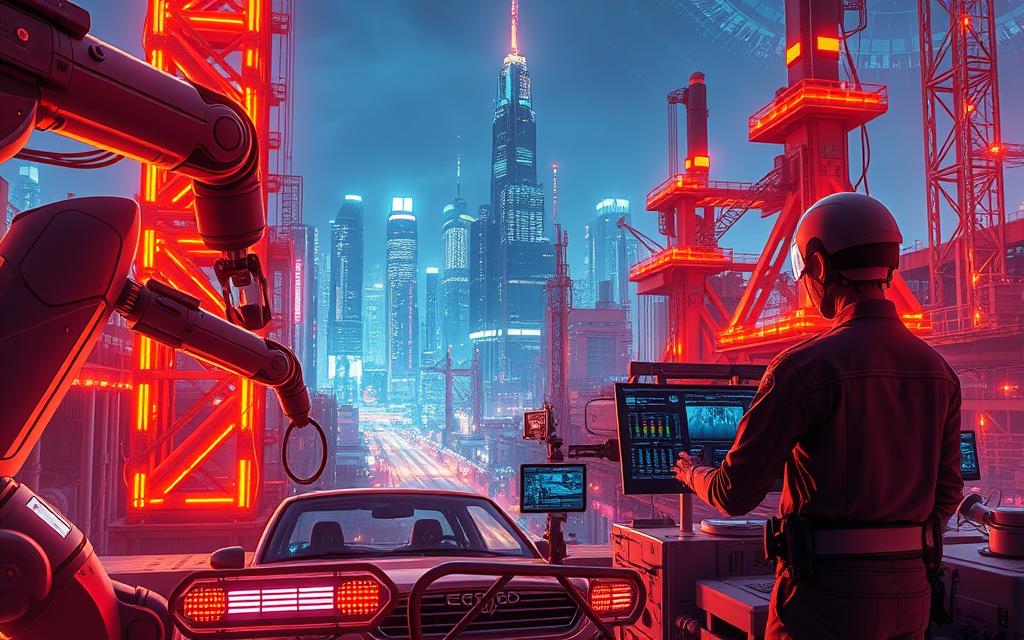
The fourth industrial revolution is changing how we live and work. It goes beyond digital tech, combining physical, digital, and biological systems.
Klaus Schwab and the World Economic Forum coined the term Industry 4.0. They highlighted the era’s fast technological growth. This era is faster than the previous ones.
This revolution mixes different areas of life. It uses advanced tech like artificial intelligence, robotics, and gene editing.
The 4IR is more than new tech. It’s a total change in how we see global industry and our tech interactions.
What Is Industry 4.0 Technology?
Industry 4.0 marks a big change in how we make things. It moves from old-school automation to smart, connected systems. This new tech mixes physical and digital worlds, making smart manufacturing possible.
At its heart, Industry 4.0 lets machines talk to each other and make choices on their own. This means factories can run better and faster, thanks to real-time info.
This change comes from combining OT and IT. It lets factories use cloud tech, AI, and big data while keeping up with making things.
Key features of Industry 4.0 include:
- Real-time data from sensors and devices
- Machines making choices on their own
- Lines that can make lots of different products
- Seeing everything that happens in the whole process
Unlike old times, Industry 4.0 lets us make custom products easily. This is a big win for using Industry 4.0 ideas.
Related Posts:





Smart factories can guess when they need fixing, save energy, and change plans fast. They’re not just automated; they’re smart.
This tech lets humans and machines work together. People can focus on new ideas and making things better, not just doing the same thing over and over. The future factory is a place where everyone learns and gets better together.
The Evolution of Industrial Revolutions
Industrial revolutions have changed how we make things and offer services over time. Each change brought big shifts that changed economies and societies deeply.
The First Industrial Revolution started in late eighteenth-century Britain. It used steam power to make production more efficient, replacing manual work. This change moved societies from rural to urban and industrial.
A century later, the Second Industrial Revolution came with electrification and mass production. Assembly lines made making things faster and better. Oil, gas, and electric power became key energy sources. Large factories became common during this time.
The mid-20th century saw the Third Industrial Revolution with computers and better communication. Electronics and early robots started changing how things were made. Data analysis became key to running industries.
Now, we’re in the Fourth Industrial Revolution, or Industry 4.0. It uses digital tech but adds cyber-physical systems. Smart factories with connected systems are leading the way in industry.
Industry 4.0 is different because it focuses on real-time data sharing. IoT industrial applications let machines talk and decide on their own. This makes production both efficient and flexible.
The move from steam to smart tech shows how fast innovation has grown. Each revolution solved old problems and brought new ones. Industry 4.0 is the most connected way to make things yet.
Knowing about these changes helps us see why Industry 4.0 is such a big step forward. It combines physical making with digital smarts, opening up new chances for improvement in all industries.
Key Pillars of Industry 4.0
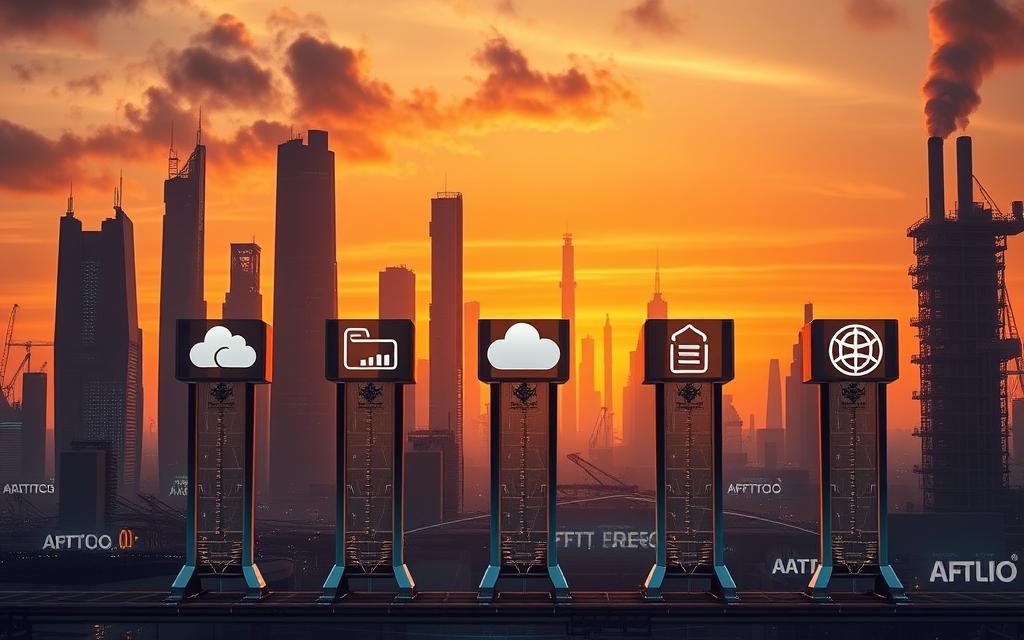
Industry 4.0 is a big change in how we make things and run industries. It’s built on several key technologies. These work together to make smart factories and smart supply chains that can change quickly.
Cyber-Physical Systems
Cyber-physical systems are at the heart of smart factories. They mix computer algorithms with real-world processes. This is done through sensors and actuators in networks.
These systems let us watch and control things in real time. They help machines work better and faster, making factories more efficient.
Internet of Things (IoT)
The Internet of Things connects devices to the internet. It makes everything smart and able to talk to each other. IoT sensors gather lots of data from machines and the environment.
This data helps us see what’s happening in factories. It’s the foundation for making smart decisions and automating processes.
Big Data and Analytics
Big data analytics turns raw data into useful information. Factories make a lot of data from sensors and machines. This data helps us make better decisions.
By using advanced analytics, we can spot trends and predict what will happen. This leads to better quality, less waste, and more productivity.
Artificial Intelligence and Machine Learning
Artificial intelligence and machine learning add smart thinking to factories. They can learn from data and make predictions without being programmed. This makes them very useful.
AI can tell us when to do maintenance and how to schedule production. Machine learning gets better over time as it learns from more data.
Cloud Computing
Cloud computing gives us the tools we need for Industry 4.0. It offers flexible resources and storage. This helps us connect different systems and places easily.
Cloud platforms make it easy to share data and work together. They also save us money on infrastructure.
Additive Manufacturing (3D Printing)
Additive manufacturing changes how we make things. It builds objects layer by layer. This lets us make things quickly and with complex shapes.
It also saves materials and makes development faster. This technology supports making things on demand and in different places.
Augmented Reality and Virtual Reality
Augmented reality and virtual reality change how we interact with machines. AR adds digital information to the real world. VR creates a fully digital world.
AR helps with hard tasks by guiding workers. VR lets us train in a realistic way and work together from anywhere.
Cybersecurity
Cybersecurity keeps our systems safe from hackers. As things get more connected, they’re more at risk. We need strong security to keep our factories running smoothly.
Good security includes separating networks and controlling who can access them. It also means always watching for threats. This keeps our systems safe and working well.
| Technology Pillar | Primary Function | Key Benefits | Implementation Challenge |
|---|---|---|---|
| Cyber-Physical Systems | Integrate computation with physical processes | Real-time monitoring and autonomous decision-making | System integration complexity |
| Internet of Things | Connect physical devices to digital networks | Comprehensive data collection and visibility | Device interoperability issues |
| Big Data Analytics | Transform data into actionable insights | Data-driven decision making and optimisation | Data quality and management |
| AI and Machine Learning | Enable predictive and cognitive capabilities | Continuous improvement and automation | Algorithm training and validation |
| Cloud Computing | Provide scalable infrastructure and connectivity | Flexible resources and system integration | Data security and latency concerns |
| Additive Manufacturing | Create objects through layer-based construction | Customisation and rapid prototyping | Material limitations and production speed |
| AR and VR | Enhance human-machine interaction | Improved training and operational guidance | Hardware costs and user adoption |
| Cybersecurity | Protect interconnected systems from threats | System integrity and availability | Evolving threat landscape |
The eight pillars of Industry 4.0 work together to change manufacturing and industries. Each technology helps the others, making systems smarter and more powerful. This teamwork drives the fourth industrial revolution.
How Industry 4.0 Transforms Manufacturing
The manufacturing world is changing fast with Industry 4.0. It’s creating a smart factory revolution. This change moves production from old assembly lines to smart, connected systems.
Cyber-physical systems are at the core of this change. They connect the digital and physical worlds. This lets factories collect and analyse data in real-time, making them more flexible and responsive.
Maintenance is now proactive, not just reactive. Sensors watch over machines, and AI manufacturing predicts when they might fail. This cuts down on downtime and saves money.
Quality control has also improved a lot. Computer vision and machine learning spot defects that humans might miss. An IBM study showed smart manufacturing can find 50% more defects and increase yields by 20%.
Modern AI manufacturing makes mass customisation possible. Factories can now make custom products in small batches. This changes how businesses work, meeting customer needs while keeping production efficient.
Real-time data analytics give managers quick insights. They can adjust production to improve efficiency and cut waste. This is a big change from old manufacturing ways.
The mix of IoT, cloud computing, and AI manufacturing makes production smarter. These systems learn and get better over time. This makes factories more efficient as they go.
Jobs are changing too. Workers are moving from manual tasks to more analytical roles. This requires new skills but makes work more interesting and valuable.
The changes aren’t just in factories but in whole supply chains. Connected systems help suppliers, manufacturers, and distributors work together better. This makes supply networks more efficient and adaptable.
As AI manufacturing grows, we’re seeing factories that can run almost on their own. These factories make decisions and improve processes without much human help. This is the full power of Industry 4.0 in action.
Benefits of Adopting Industry 4.0 Technologies
Organisations that adopt Industry 4.0 technologies see big changes. These changes help in many ways, like making things better and saving money. They also help in planning for the future.
Right away, companies see big improvements. They work faster and better thanks to new tech. Quality checks get better too, catching problems early.
With these new systems, mistakes go down a lot. This means things keep coming out right, all the time. It also saves a lot of time in making things.
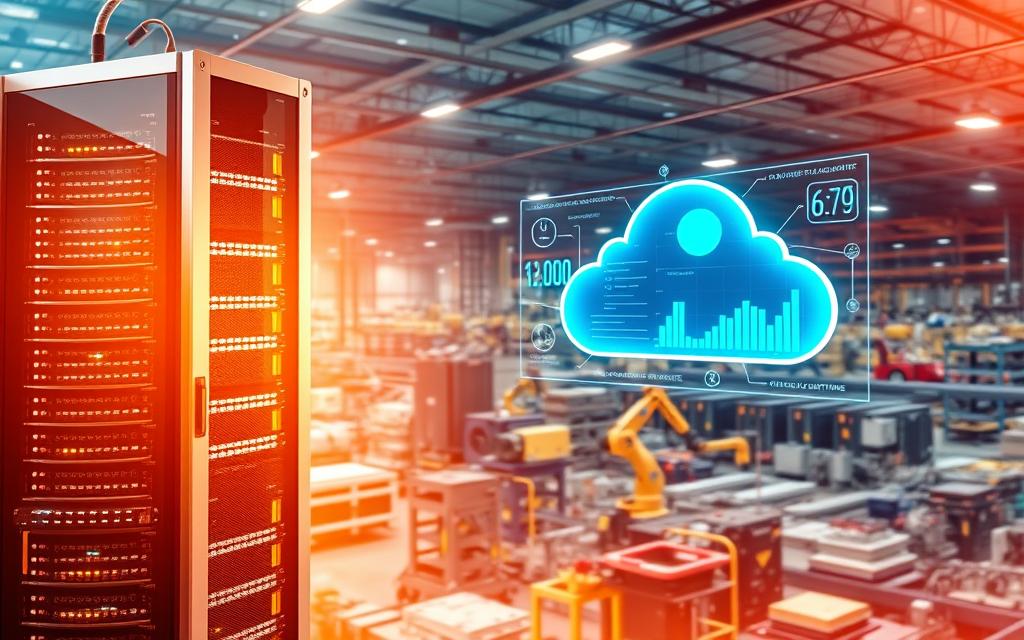
There’s also a big economic win. Studies say these new techs could add up to $3.7 trillion in value by 2025. This is because they help cut costs in many ways.
Keeping things running costs less because of smart planning. Storing parts just in time saves money too. Making things also gets better, using less and wasting less.
The cloud computing industry helps with these savings. It lets companies use big computing power without spending a lot of money.
Strategically, these new techs help companies grow. They can change fast to meet new market needs. They also find new ways to make money by using data.
“Industry 4.0 is not just new tech. It’s a big change in how businesses work.”
These techs also help the planet. They use less energy and manage resources better. This makes companies look good and helps the environment.
Now, making things just for one person is easier. Companies can make special products without losing efficiency. This makes them stand out and keeps customers coming back.
How things are made and delivered changes too. Companies can see what’s happening in real time. This helps them make better choices and work better with others.
The cloud computing industry makes this easier. It gives companies a safe place to store and use data. This helps them work together better.
These benefits show why using Industry 4.0 is key for companies. It helps them stay ahead by improving how they work, save money, and plan for the future.
It’s not just about saving money. It’s about growing and leading in the market. Moving to smart manufacturing helps companies keep getting better and adapting to new things.
When companies use these techs, they find more good things. Workers are happier because they do more interesting work. Customers are happier because they get better products that are just right for them.
The real value of Industry 4.0 is more than just numbers. It changes how companies work and compete in a digital world. Companies that use these techs are ready for the future.
Challenges and Barriers to Implementation
Introducing Industry 4.0 technologies is tough. It faces obstacles in economics, society, and technology. These barriers slow down the process and need careful planning to get past.
Money is a big problem. Companies must spend a lot on new gear, software, and updates. It’s hard to see the benefits without clear proof.
People’s fears about losing their jobs are another big issue. As machines take over, workers worry. This fear makes it hard for teams to work together.
Teaching workers new skills is also a challenge. Many don’t have what’s needed for the new tech. Training costs more time and money.
Privacy worries grow as data collection increases. Companies must reassure workers about being watched. They also need to follow strict data rules.
Systems not talking to each other is a problem. Without common standards, different devices can’t work together. This is a big issue for things like 3D printing.
With more connections, there’s a higher risk of cyber attacks. Old systems become vulnerable when linked to the internet. Strong security is needed but makes things more complicated.
Unclear laws slow things down in many areas. Laws can’t keep up with new tech. Companies face confusing rules that change by place and field.
Upgrading tech is often too much for current systems. Reliable connections need big updates to networks and systems.
To succeed, we must tackle these many challenges. This means detailed planning, talking to everyone involved, and introducing new tech step by step.
Industry 4.0 in Various Sectors
Industry 4.0 is changing many areas, not just factories. It brings digital changes to different sectors. This leads to better efficiency, transparency, and new ideas in many fields.
Agriculture is getting smarter with IoT sensors. These sensors check soil, crops, and the environment. They help with water use, cut down waste, and boost crop growth.
Vertical farming uses special lights and climate control. This means crops can grow all year round.
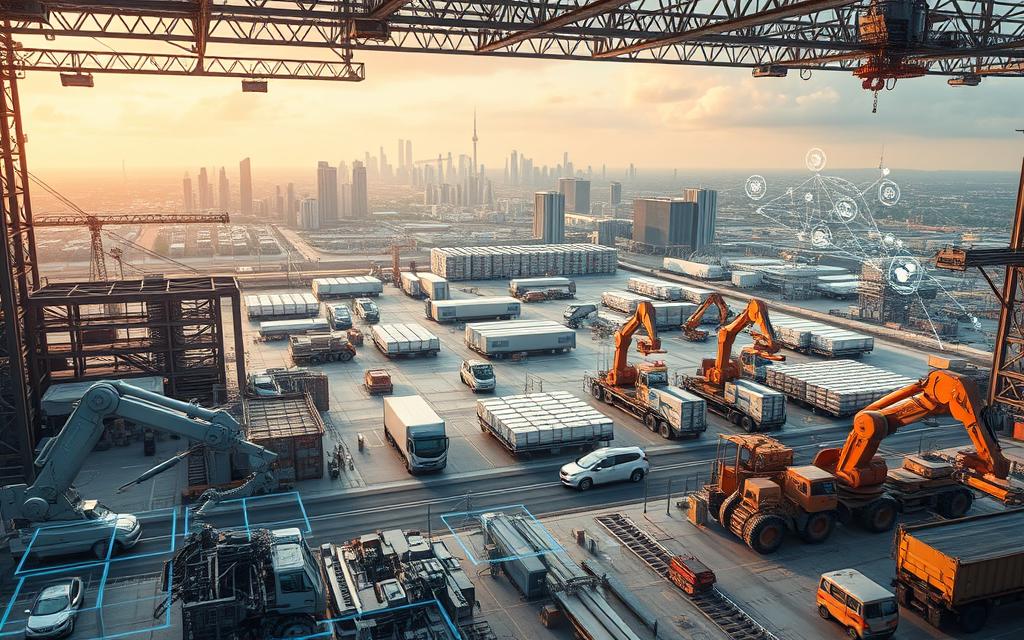
Logistics and supply chains are getting a boost from new tech. Autonomous vehicles and tracking systems give a clear view of goods moving. Blockchain helps keep goods real and stops fake ones from getting in.
Healthcare is changing with new medicine and tests. Wearables watch over patients’ health and send data to doctors. Surgeons use augmented reality VR for better surgeries and training.
The energy sector is smartening up with smart grids. These systems balance energy supply and demand. They use green energy and keep the grid stable. Smart meters let people see how much energy they use.
Retail is getting a makeover with new stores and shopping ways. Stores like Amazon Go have no cashiers, thanks to tech. Augmented reality VR lets people see products in their homes before buying.
The food industry is tracking food from farm to table. Blockchain keeps a safe record of food’s journey. People can scan a QR code to see where their food came from.
| Sector | Key Technologies | Primary Benefits | Implementation Examples |
|---|---|---|---|
| Agriculture | IoT sensors, drones, automation | Increased yields, reduced waste | Precision irrigation systems |
| Healthcare | Wearables, AI diagnostics, AR/VR | Personalised treatment, remote care | Surgical simulation training |
| Energy | Smart grids, predictive analytics | Efficient distribution, renewables integration | Dynamic demand response systems |
| Retail | Computer vision, AR, biometrics | Frictionless experiences, inventory optimisation | Cashierless checkout systems |
| Food Industry | Blockchain, IoT tracking | Full traceability, quality assurance | Farm-to-table verification systems |
Industry 4.0 is speeding up the knowledge economy. It helps businesses make better decisions with data. This tech mix opens up new ways to do business across old lines.
Implementing Industry 4.0: Steps for Organisations
Starting your digital transformation journey needs a clear plan. It’s not just about adopting new tech. You also need to change your culture and align all business areas.
Getting executive support is key to success. Leaders must commit to resources and align the organisation. Without them, digital projects often fail to take off.
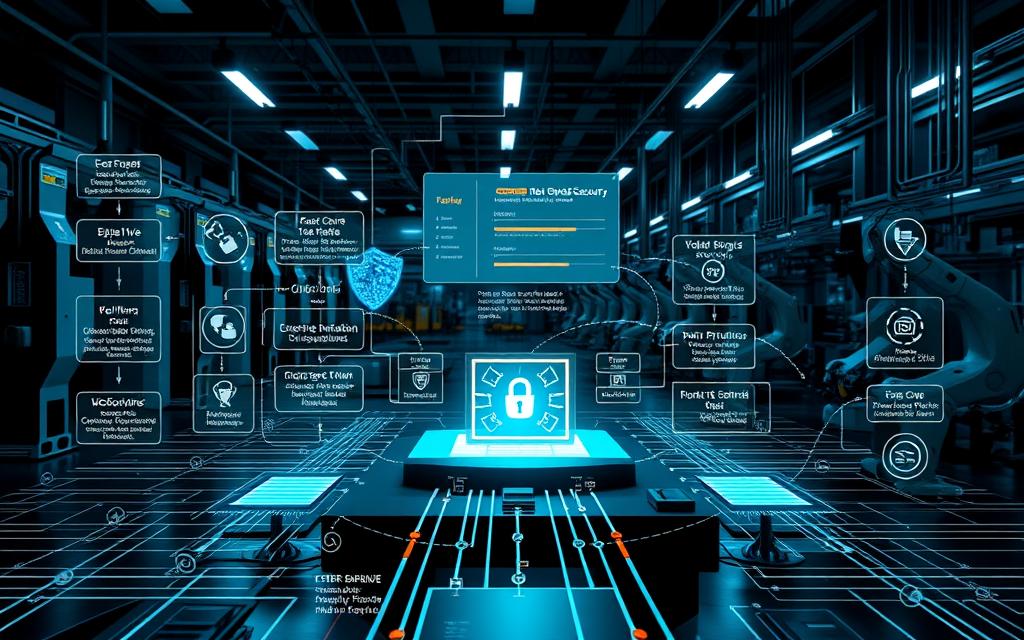
First, check where you stand digitally and what you need. This helps spot areas for growth. Many find success in using hybrid multicloud IT setups for different tasks.
Creating a strong cybersecurity plan is vital. It protects both IT and OT systems. Industry 4.0’s connected systems bring new risks that need solid security.
Training your team is also important. Invest in programmes to update their skills. When staff feel ready for change, they’re more open to it.
Start with small pilot projects. They show the value of new tech and build momentum. These tests are great for learning and growing.
Make sure data flows smoothly across your whole chain. Breaking down information barriers helps in making quick decisions. This setup is key for advanced analytics and AI.
Here are the main steps to follow:
- Plan your strategy and make a business case
- Check your current state and find gaps
- Set up a cybersecurity framework
- Design your tech architecture
- Run pilot projects
- Expand and refine your efforts
Don’t forget about your supply chain. Connected networks improve response times and reduce problems. They offer better visibility and coordination.
The table below shows important things to consider for each part of your organisation:
| Organisational Aspect | Implementation Focus | Key Success Factors | Potential Challenges |
|---|---|---|---|
| Technology Infrastructure | Hybrid cloud deployment | Scalability and flexibility | Legacy system integration |
| Cybersecurity | OT and IT protection | Comprehensive threat monitoring | Evolving threat landscape |
| Workforce Development | Skills enhancement programmes | Continuous learning culture | Change resistance |
| Data Management | Cross-functional integration | Standardised data protocols | Information silos |
| Operational Processes | Digital twin implementation | Real-time simulation capabilities | Implementation complexity |
Remember, Industry 4.0 is a journey, not a finish line. You must keep improving and adapting as tech changes and new chances come up.
Set up ways to track your progress and impact. Regular checks help you fine-tune your approach. This keeps your efforts aligned with your goals.
The Role of Data in Industry 4.0
At the heart of Industry 4.0 is a huge flow of operational data. This data turns old manufacturing into smart, quick systems.
Sensors and connected machines create lots of real-time data. They track things like temperature and machine performance. This data flow is faster and bigger than ever before in factories.
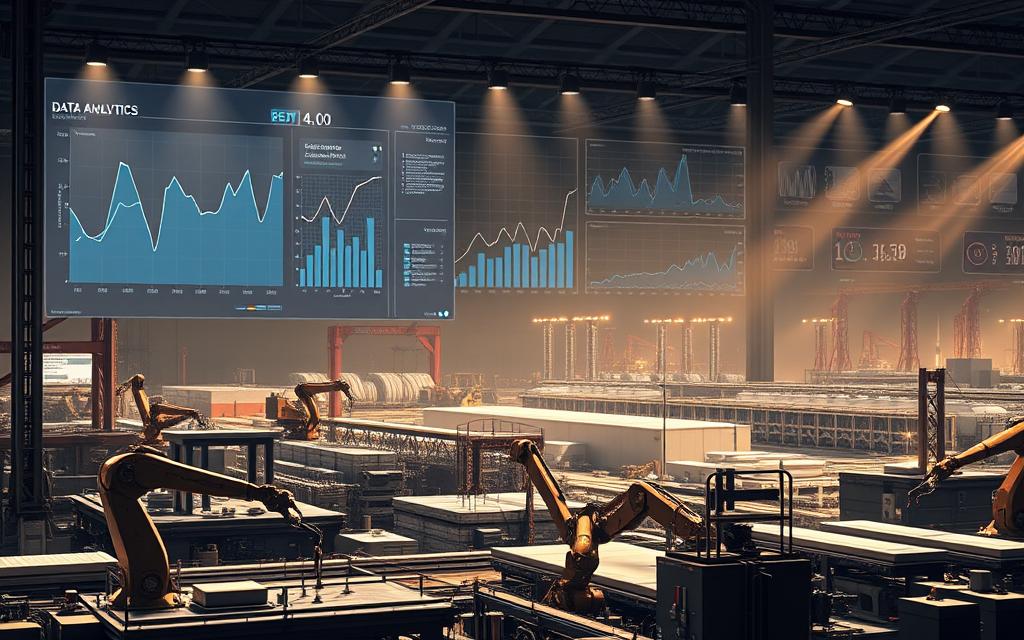
Companies use special storage for this data. Data lakes hold raw data for later use. Data warehouses store data ready for quick use. This setup makes data management flexible and efficient.
Big data analytics looks at past data and finds important patterns. Advanced algorithms find insights that humans might miss. These insights help make better decisions in production and supply chains.
Artificial intelligence and machine learning turn data into predictions. They forecast when machines might need maintenance. They also plan production based on current demand. This approach cuts downtime and boosts efficiency.
Digital twins are a key use of industrial data. Companies make virtual copies of their operations using sensor data. These digital models let them test and simulate changes without affecting real production. Engineers can try out ideas in a virtual space before applying them in real life.
In smart factories, making decisions based on data is the norm. Managers use up-to-date information instead of guesses or past data. This method cuts down on mistakes and improves results.
The success of digital transformation in making depends on using data well. Companies that get data management right have big advantages. They work better, spend less, and adapt quickly to market changes.
“Data is the new science. Big data holds the answers”
Creating strong data strategies needs careful planning and investment. Companies must focus on data quality, security, and access. The benefits, like better performance and smarter operations, make it worth it.
This data-focused way changes what makes manufacturing great. It’s at the heart of Industry 4.0’s big change in many industries.
Future Trends and the Next Phase
The industrial world is changing fast, thanks to new technologies. Artificial intelligence is leading this change, with generative AI making new content and solutions.
These AI advancements are taking us closer to artificial general intelligence (AGI). Some think AGI could change the world as much as the industrial revolutions did. The goal is to make machines think like humans.
Robotics are getting smarter, with humanoid machines that learn on their own. They use advanced algorithms to adapt to different tasks and places.
Digital twin technology is getting better, using real-time data from physical systems. This lets us analyse and improve things in new ways. It’s changing how we do predictive maintenance in factories.
Blockchain is making industrial networks safer and more open. It keeps records that can’t be changed, helping with supply chains and protecting ideas. It builds trust among different groups.
Now, we’re seeing new ideas where biology meets technology. We have sensors, interfaces, and computing inspired by nature. These ideas are changing how we see the line between living things and machines.
These changes are moving us towards Industry 5.0. This new phase is about working together with machines, not just replacing them. It’s about making things better together.
These new predictive maintenance systems will use AI, sensors, and digital twins. They’ll predict problems before they happen. This means less downtime and better work.
We need to think about how these technologies affect society. As systems get smarter and more independent, we need to update our rules. We must make sure these tools help us, not harm us.
Companies should help their workers get ready for these changes. Being able to work with AI and robots will be key. Keeping up with new skills and understanding technology is essential for success.
Conclusion
Industry 4.0 is changing everything. It brings together cyber-physical systems to change how we make things and do business. This change brings more productivity and sustainability, but it also brings big challenges.
For businesses to stay ahead, they must adopt Industry 4.0 technologies. These tools help cut down waste and make things more efficient. They also help make better decisions with real-time data. Companies need to get on board with these new tools to keep up.
Supply chain 4.0 is a key part of this change. It uses IoT and AI to make logistics better. This makes operations smoother and helps manage resources better. By embracing supply chain 4.0, companies can make their networks more resilient and responsive.
The future asks for constant adaptation and innovation. Companies that invest in Industry 4.0 will do well. They will lead in efficiency, customer satisfaction, and global reach. Moving towards a fully digital enterprise is now essential.
FAQ
What is Industry 4.0 and how does it differ from the Digital Revolution?
Industry 4.0, or the Fourth Industrial Revolution, is a big change from the Digital Revolution. It combines the physical, digital, and biological worlds. Klaus Schwab and the World Economic Forum introduced it. It focuses on smart, self-operating systems, unlike the Digital Revolution’s digital focus.
How do smart factories operate within Industry 4.0?
Smart factories use systems that work on their own, thanks to data. They mix operational technology (OT) and information technology (IT) smoothly. This leads to better efficiency, flexibility, and visibility, unlike old mass production.
What are the key technological pillars of Industry 4.0?
Key technologies include Cyber-Physical Systems, the Internet of Things (IoT), and Big Data. Artificial Intelligence, Cloud Computing, and Additive Manufacturing are also important. Augmented and Virtual Reality, and Cybersecurity, work together to drive innovation and connection.
What benefits can organisations expect from adopting Industry 4.0?
Adopting Industry 4.0 can lead to better efficiency, productivity, and quality. It also cuts costs in maintenance, inventory, and production. Benefits include flexibility, faster innovation, and sustainability, making mass customisation possible.
What challenges are associated with implementing Industry 4.0?
Challenges include high costs and unclear ROI. There are also social issues like job loss and privacy concerns. Political barriers, like lack of standards, and organisational challenges, like cybersecurity risks, exist too.
How is data utilised in Industry 4.0 systems?
Data is vital in Industry 4.0, coming from IoT sensors. It’s managed in data lakes and warehouses. Big data analytics and AI help predict and make decisions, creating digital twins for optimisation.
Which sectors beyond manufacturing are impacted by Industry 4.0?
Industry 4.0 affects many sectors, not just manufacturing. It changes agriculture, logistics, healthcare, energy, and retail. For example, Amazon Go’s stores show how it impacts retail.
What steps should organisations take to implement Industry 4.0?
Organisations should get executive support and assess their digital readiness. They need a strong cybersecurity plan and to upskill their workforce. Starting with pilot projects and focusing on data integration is key, often with hybrid cloud technology.
What future trends are shaping the next phase of Industry 4.0?
Future trends include the growing role of artificial intelligence, like generative AI. Advanced robotics, digital twins, blockchain, and the blending of biological and digital technologies are also on the horizon. These will change industries and society further.